For most Ottawa homes, R60 is a sensible target when upgrading attic insulation. How much you need to add depends on what is already in your attic, the type of insulation you have, and its condition.
Before adding more, it’s worth checking the existing insulation and looking for areas where coverage is thin or uneven. That can tell you whether a straightforward top-up is enough or whether the attic needs further attention.
How Much Attic Insulation Do Ontario Homes Need?
In Ontario’s climate zone, which includes Ottawa, the Building Code sets a minimum of R50 for attic insulation, with R60 required for new construction. The exact requirements that apply to a renovation can vary depending on the scope of the work, so R60 is best treated as a sensible target for an existing home rather than a guaranteed legal requirement in every situation.
The depth needed to reach R60 depends on the insulation material and its R-value per inch. As a rough guide, R60 often works out to around 22 inches of blown-in loose-fill insulation or roughly 16 to 20 inches of fiberglass batt. These figures can vary by product, and blown-in insulation can settle over time, so depth alone isn’t a precise way to determine R-value.
How to Check How Much Insulation You Currently Have
You don’t need to hire anyone to get a rough answer. If your attic has a hatch or access panel and you can reach it safely, use a tape measure or ruler to check the insulation depth.
Don’t rely on the depth around the hatch alone. Check several areas if they’re safely accessible, since insulation coverage can vary considerably across an attic. Older homes in particular may have thin or uneven areas around the perimeter, where the roof meets the exterior walls.
Look for insulation that is compressed, matted down, damaged, or noticeably thinner in certain areas. Gaps around the edges of the attic floor are worth noting too.
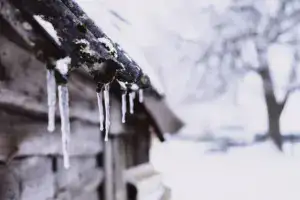
Those perimeter areas can be especially important in Ottawa. Long winters and repeated freeze-thaw cycles can make the effects of heat escaping into a poorly insulated attic more noticeable. Warm air entering the attic can contribute to uneven roof temperatures, patchy snow melt, and, in some cases, ice dams along the eaves.
Signs Your Attic Needs More Insulation
You don’t necessarily need to climb into the attic to notice a potential problem. Watch for:
- Icicles or ice dams forming along the roofline in winter
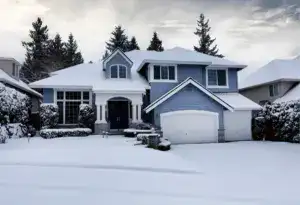
- Snow that melts unevenly across the roof
- Upstairs rooms that feel noticeably colder than the rest of the house
- Heating costs that seem unusually high despite similar usage and weather
- Visible insulation in the attic that looks thin, patchy, or compressed
None of these signs on its own proves your attic is under-insulated. A cold upstairs room, for example, could also be affected by air leakage, windows, ductwork, or other parts of the building envelope. But seeing several of these issues together is a good reason to check the attic.
Topping Up vs. Replacing
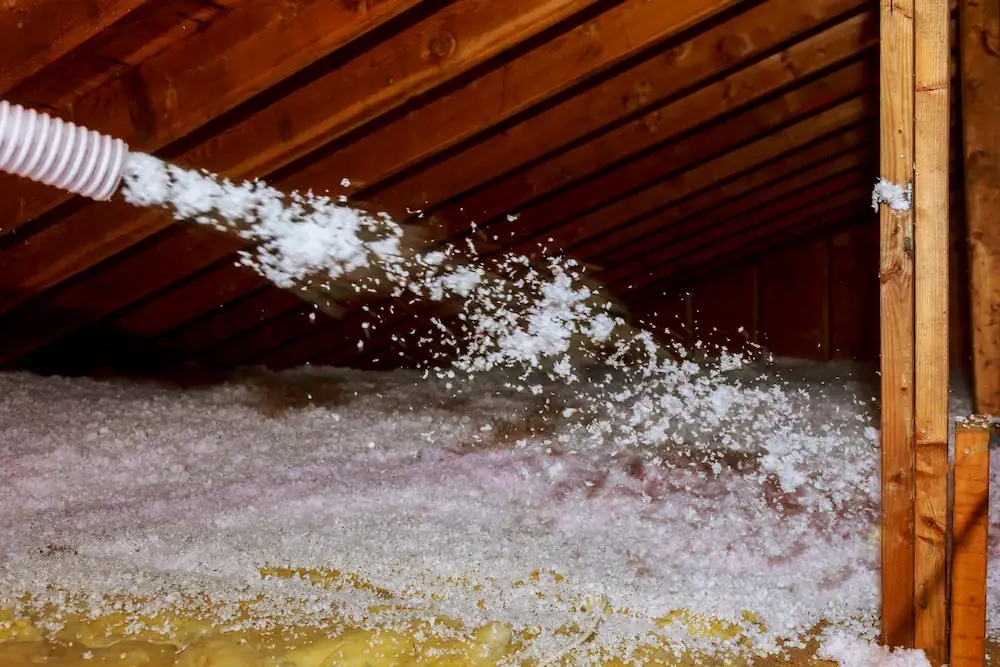
If your existing insulation is in reasonably good shape but is thinner than it should be, adding more on top is often the simplest fix. Loose-fill insulation in particular can usually be topped up directly, as long as the existing material is suitable for it.
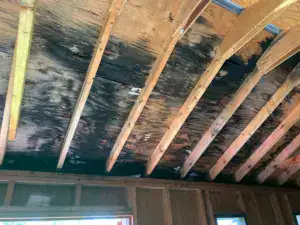
Wet, moldy, heavily compressed, or pest-contaminated insulation is a different situation. That may need to come out before anything new goes in. Adding fresh insulation on top of a problem doesn’t solve it. It just buries it.
Air sealing is worth addressing at the same time. Significant gaps between the living space and attic can allow warm air and moisture into the attic, reducing the effectiveness of the insulation and potentially contributing to other problems.
If you’re not sure which situation you’re dealing with, it’s worth having the attic assessed before deciding what to do.
Find Out What Your Attic Actually Needs
Not sure whether your attic needs more insulation or a full replacement? Ottawa Insulations can assess your existing insulation, identify problem areas, and tell you whether a top-up, a replacement, or something else makes the most sense for your home. Contact us for a free estimate to get started.
Frequently Asked Questions:
Can I add new insulation over old insulation?
In most cases, yes, as long as the existing insulation is dry, clean, and in reasonable condition. If the old insulation is wet, moldy, damaged, or contaminated, it may need to be removed before new insulation is added.
Is more insulation always better?
Not automatically. Insulation isn’t a substitute for air sealing or ventilation. Adding more material to an attic with unresolved air leaks or ventilation problems won’t fix the underlying issue. Those problems should be addressed before or alongside additional insulation.
How much does it cost to add attic insulation in Ottawa?
The cost depends on how much insulation is already there, how much needs to be added, the material used, and how accessible the attic is. A straightforward top-up is generally less involved than removing existing insulation and starting over. An assessment is the best way to determine what your attic needs and provide an accurate estimate.
Can I add attic insulation myself, or should I hire a professional?
Measuring the insulation depth and looking for obvious problems is something most homeowners can do themselves. Installing insulation, especially blown-in material, is more difficult to do evenly without the right equipment and experience. For anything beyond a small top-up, professional installation can help ensure the attic has consistent coverage and the intended R-value.