Insulation is one of the smartest investments for any home in Ottawa. If you’re noticing high heating bills, drafts around your windows, or want to get ahead of Ottawa’s harsh winters, improving your insulation can make a real difference. It keeps your home comfortable throughout the year, lowers energy costs, and helps block unwanted noise, making every season more enjoyable.
What is R-Value?
The R-value measures a material’s resistance to heat flow. The higher the R-value, the better the insulation. For Ottawa homeowners, where winters are long and cold, and summers can be humid, choosing the right R-value is crucial for each area of your home:
- Attics: Require higher R-values to keep heat from escaping in winter and prevent summer heat from entering.
- Walls: Moderate R-values work best to maintain comfortable indoor temperatures.
- Floors and Basements: Often need moisture-resistant insulation to prevent dampness from Ottawa’s spring thaw.
Types of Insulation
Different insulation types serve different purposes, and some are better suited for Ottawa’s climate and typical home structures.
1. Fiberglass Insulation
Fiberglass insulation is made from fine strands of glass woven into a blanket-like material. It comes in batts, rolls, or loose-fill forms and can be cut to fit standard wall cavities and attic spaces.
Pros:
- Affordable
- Widely available
- Easy to install
- Decent R-value (R-3 to R-3.8 per inch)
Cons:
- Can absorb moisture if exposed to water or excess humidity
- Settles over time, reducing effectiveness
- Fibers can irritate skin and lungs during installation
- Creates air gaps if not installed precisely
In older Ottawa homes with uneven wall cavities or attic drafts, fiberglass insulation provides a cost-effective solution when installed properly
2. Cellulose Insulation
Cellulose insulation is made from recycled paper products treated with fire-retardant and pest-deterrent chemicals. It’s blown into walls and attics using specialized equipment.
Pros:
- Environmentally friendly (made from recycled materials)
- Excellent R-value (R-3.2 to R-3.8 per inch)
- Superior coverage that fills irregular spaces completely
- Better sound dampening than fiberglass
Cons:
- Moisture sensitive and can develop mold if exposed to damp conditions
- May settle and compact over time
- Requires professional installation
- Lower fire rating than mineral wool
Many Ottawa homeowners use cellulose to upgrade older attics, improving winter warmth without major renovations. It’s particularly effective in heritage homes where standard batts don’t fit properly.
3. Spray Foam Insulation
Pros:
- Highest R-value per inch (R-6 to R-7 for closed-cell)
- Superior air sealing and thermal barrier
- Moisture resistant, especially closed-cell
- Doesn’t settle or degrade over time
- Adds structural support to walls and roofs
Cons:
- Most expensive insulation option
- Requires professional installation
- Off-gassing of volatile organic compounds during application
- Difficult to remove once cured
Spray foam is ideal for modern Ottawa homes with complex rooflines or older homes with many gaps that need sealing. It excels in basements and crawl spaces where moisture control is critical.
4. Mineral Wool Insulation
Mineral wool (also called rock wool or slag wool) is made from natural minerals or industrial byproducts melted and spun into fibrous material. It comes in batts, rolls, or loose-fill forms.
Pros:
- Excellent fire resistance (highest rating of common insulations)
- Moisture resistant and doesn’t absorb water
- Good sound-dampening properties
- Competitive R-value (R-3.2 to R-4.2 per inch)
- Pest-resistant
Cons:
- Higher cost than fiberglass and cellulose
- Heavier than other insulation types
- Professional installation preferred for blown-in applications
Mineral wool is ideal for Ottawa basements where moisture is a concern, and for homeowners prioritizing durability and fire resistance.
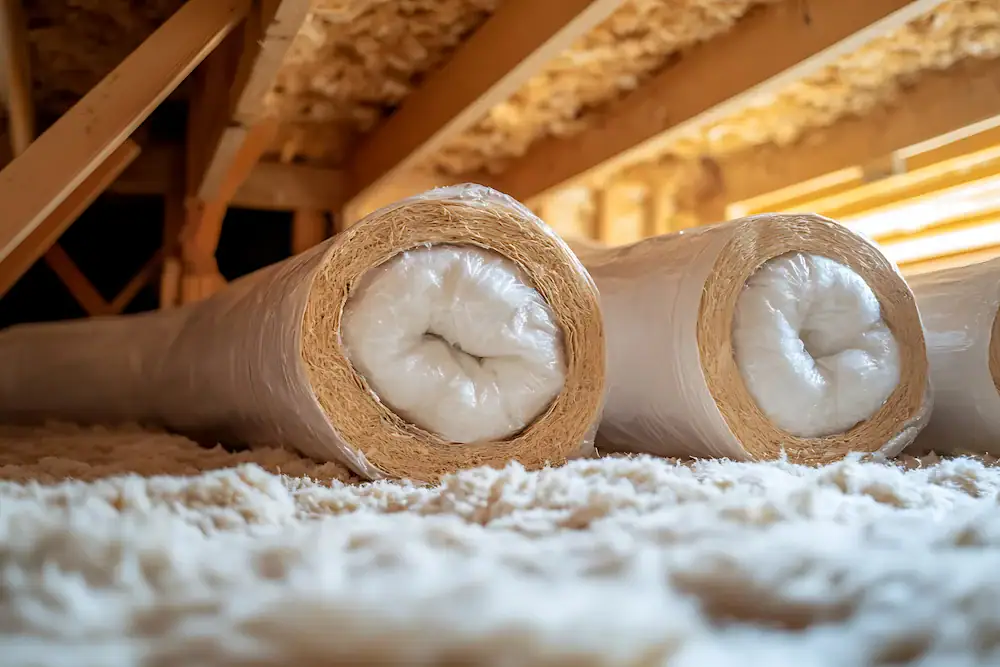
How Insulation Works
- Warm air stays inside during Ottawa’s long, cold winters
- Heat is blocked from entering during humid summer months
DIY vs. Professional Installation
While DIY insulation may seem cost-saving, it often comes with risks:
- Incorrect installation reduces efficiency. Even small gaps and improper placement can significantly reduce how well your insulation performs.
- Some materials, like spray foam or fiberglass, are hazardous without proper protective equipment. Professional installers have the right gear and training to handle these safely.
- Ottawa’s seasonal temperature changes can make DIY installations tricky. Spring thaw moisture, frost action, and temperature cycling require proper vapor barrier placement and ventilation knowledge.
Professional installation ensures your insulation performs as expected, keeps your family safe, and protects your home from potential moisture or structural issues.
Choosing the Right Insulation for Your Ottawa Home
When selecting insulation, consider:
- Location in the home: Attic, walls, floors, basement
- Climate: Ottawa winters require higher R-values
- Budget: Balance upfront costs with long-term energy savings
- Home type: Older brick homes vs. newer builds have different needs
- Safety and expertise: Some materials require professional experience