There’s a specific kind of cold that many homeowners recognize in their basement. Not drafty-window cold, but the feeling that seems to come from the floor and walls no matter how high you turn up the heat. Often, that’s a sign that the insulation, air sealing, or moisture control isn’t doing its job. These issues are especially common in older Ottawa homes with stone or concrete foundations.
According to Natural Resources Canada’s Keeping the Heat In guide, basements can account for about 25 percent of a home’s total heat loss, driven by the large, uninsulated surface area both above and below grade, along with air leakage through basement windows, penetrations, and the top of the foundation wall. Ottawa’s cold winters and freeze-thaw cycles make proper insulation and air sealing especially important, particularly in older homes where small gaps and outdated materials can lead to noticeable comfort problems.
Signs Your Basement Insulation Needs an Upgrade
- Basement walls feel cold to the touch
- Rooms above the basement feel colder than the rest of the home
- Drafts appear around rim joists or foundation walls
- Energy bills increase noticeably during winter
- Existing insulation looks compressed, damaged, or damp
Insulating Basement Walls
Basement walls are where most of the insulation work happens, and they’re also where most mistakes happen. Concrete and stone foundation walls are poor insulators on their own, and they sit directly against the ground, which means moisture management matters just as much as R-value.
The most common basement wall insulation options are:
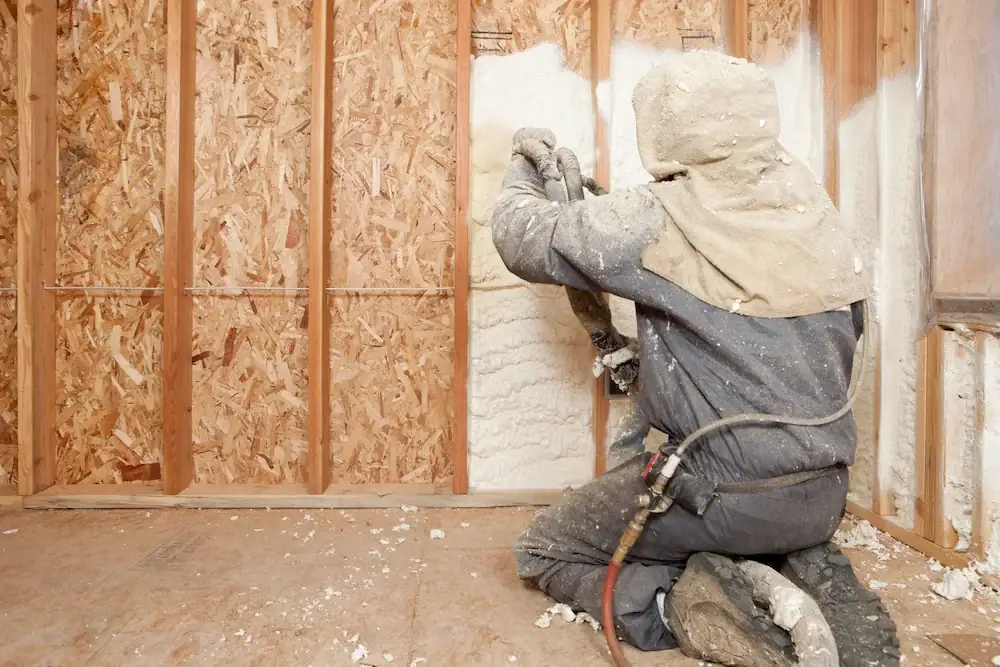
Spray foam: Closed-cell spray foam insulates, air seals, and can act as its own vapor barrier when installed at the required thickness, providing multiple benefits in a single application. Because it bonds directly to concrete and fills every gap and crack, it’s one of the most effective options for basements, particularly in older Ottawa homes where walls are uneven or irregular.
Rigid foam board (XPS or EPS): Rigid foam is a popular choice for basement walls because it resists moisture well, holds its R-value over time, and is relatively straightforward to install against concrete. It performs best when seams are sealed and the boards fit tightly against the wall.
Mineral wool: Mineral wool (sometimes called rock wool) holds up well in damp conditions and does not provide a food source for mold growth. It’s a strong choice for basements where moisture control is the top priority.
Fiberglass batt: Fiberglass is inexpensive and widely available, but it’s also the option most likely to create problems when used incorrectly below grade. It does not perform well in below-grade applications because it is vulnerable to moisture exposure. When it becomes damp, it can lose insulating performance and create conditions where mold can develop on surrounding materials. For this reason, it’s generally not recommended as the primary insulation against a basement wall.
Whichever material you choose, the vapor barrier placement matters. Under the 2024 Ontario Building Code, a vapor barrier is required on the warm side of the wall assembly, meaning the interior side facing your living space. This prevents warm, moist indoor air from reaching the cold concrete, where it would otherwise condense and create the exact conditions mold needs to grow.
The code also sets minimum insulation targets for basement walls. Ottawa’s climate zone requires one of two prescriptive options: R20 cavity insulation, typically batt insulation installed between wood studs, or R12 continuous insulation, typically rigid foam board or spray foam applied directly against the concrete.
Continuous insulation reduces thermal bridging, where heat escapes through the wood studs in a framed wall. That’s one reason continuous insulation systems such as spray foam and rigid foam are recognized separately in the building code despite the lower minimum R-value requirement. This is a meaningful improvement over many older basements, which often had only R12 batt insulation installed over part of the wall. If your basement was insulated decades ago, it’s very likely below today’s standards.
Insulating the Basement Floor
Basement floors don’t always need insulation, but in colder parts of an Ottawa home, an uninsulated concrete slab can make a basement feel far colder than the wall insulation alone would suggest. Moisture-resistant options, such as rigid foam board under a subfloor system, are generally recommended over anything that can absorb moisture from the slab. If you’re planning to finish the basement into living space, floor insulation is worth the investment for comfort alone.
Insulating the Basement Ceiling
Insulating the basement ceiling, meaning the space between the basement and the floor above, is optional in most cases and depends on how the space is used. If the basement stays unfinished and mechanical systems like ductwork run through the ceiling, insulation can help with temperature consistency upstairs, but it isn’t a code requirement the way wall insulation is. One thing worth checking regardless of whether you insulate is moisture. A basement ceiling that stays damp or shows signs of condensation usually points to a wall or moisture problem, not a ceiling one.
Don’t Forget the Rim Joists
Rim joists, the band of framing where the foundation wall meets the floor above, are one of the most commonly missed spots in a basement insulation project. They’re a direct air leakage point, which is why proper basement insulation systems often address both the foundation walls and rim joists together rather than treating them as separate areas. Rigid foam or spray foam both work well here, since batt insulation alone won’t stop the air leakage.
Ready to Insulate Your Basement?
Basement insulation is one of those upgrades that’s easy to get wrong with the wrong material or a missing vapor barrier, and the mistakes often don’t show up until there’s a moisture or mold problem months later.
Ottawa Insulations assesses your basement’s specific conditions and recommends the right material and approach, with attention to the vapor barrier and air sealing details the Ontario Building Code requires. Contact us for a free estimate and we’ll help you get it right the first time.
Frequently Asked Questions:
Is it a good idea to insulate your basement?
Yes. Basements can be a significant source of heat loss in a home, and insulating them improves comfort, reduces heat loss, and makes finishing the space for living area much more practical. It’s especially worthwhile in older Ottawa homes that were built before current insulation standards.
What are common mistakes to avoid when insulating a basement?
The most frequent mistakes are using fiberglass batt directly against a damp foundation wall, skipping the vapor barrier or placing it on the wrong side, leaving gaps at corners and seams instead of insulating continuously, and forgetting the rim joists entirely. Addressing moisture issues before insulating is also essential. Insulating over an existing leak or dampness problem can trap moisture rather than solve it.
What R-value do I need for basement walls in Ottawa?
Under the 2024 Ontario Building Code, Ottawa homes must meet one of two prescriptive targets for basement walls: R20 with cavity batt insulation, or R12 with continuous insulation like rigid foam or spray foam applied directly to the concrete. Older homes often have far less than either standard, since builder-grade insulation from previous decades was typically incomplete R12 batts with no continuous layer.
Do I need a vapor barrier in my basement?
Yes. The Ontario Building Code requires a vapor barrier on the interior, or warm side, of basement wall insulation. This keeps humid indoor air from reaching the cold concrete and condensing, which is one of the most common causes of basement moisture problems.
What’s the best insulation for basement walls?
Spray foam, mineral wool, and rigid foam are all strong basement insulation options, depending on the home’s moisture conditions, budget, and air-sealing requirements. Spray foam is particularly effective where air sealing is a priority, while mineral wool and rigid foam are popular moisture-resistant options. Fiberglass is generally not recommended below grade since it’s more vulnerable to moisture exposure.
Can insulation cause mold in my basement?
Insulation itself doesn’t cause mold, but the wrong material or a missing vapor barrier can trap moisture against your walls, creating the damp conditions mold needs to grow. This is why moisture-resistant materials and proper vapor barrier placement matter as much as R-value.
Should I insulate my basement ceiling?
It depends on how you use the space. Ceiling insulation isn’t required by code the way wall insulation is, but it can help with temperature consistency if the basement stays unfinished. If your basement ceiling feels damp, that’s usually a sign of a wall or moisture issue rather than a reason to insulate the ceiling itself.